

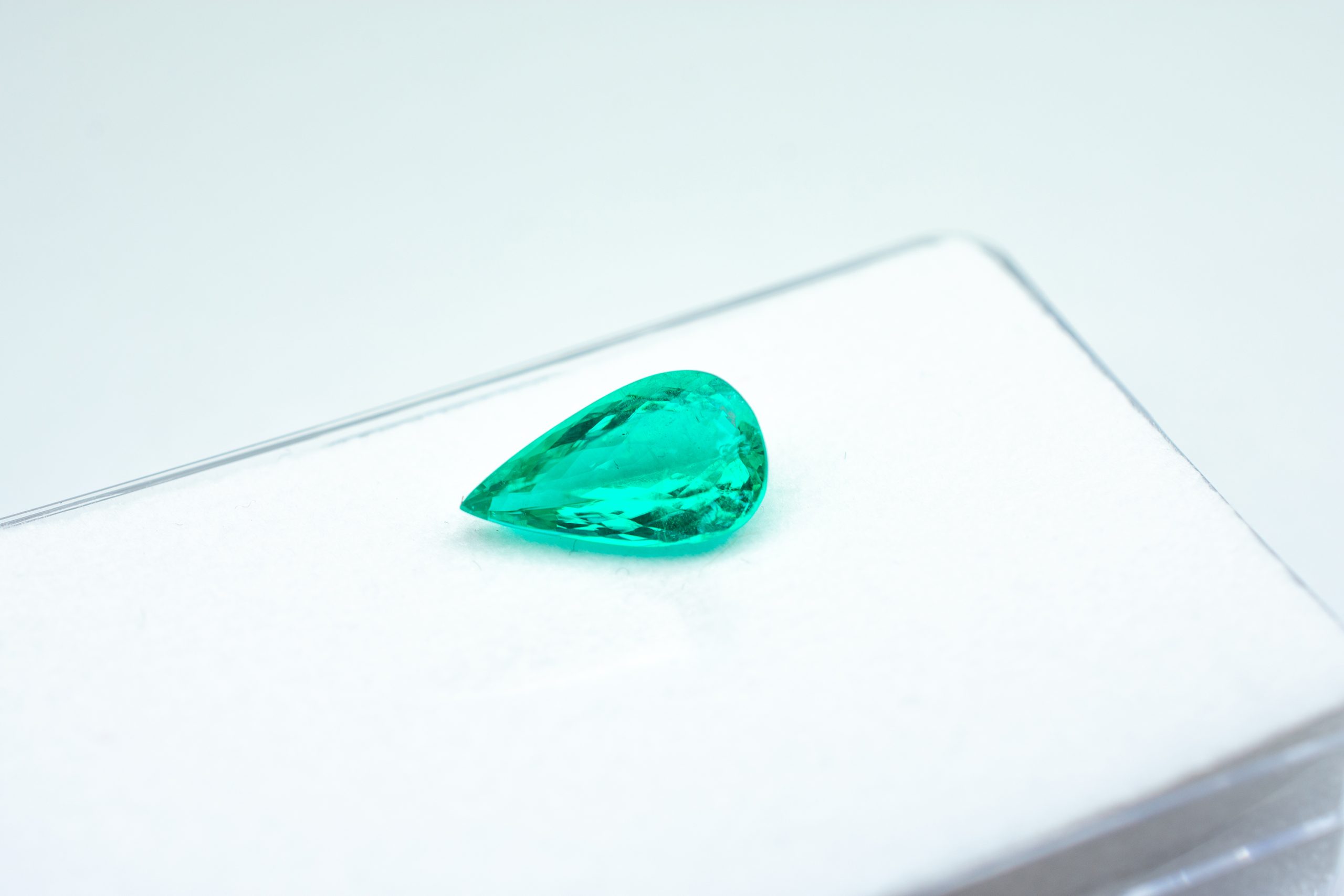
Clarity is one of the most important factors in evaluating a colored gemstone, yet it’s often the least understood. Unlike diamonds, where near-flawless clarity is the gold standard, colored gemstones are celebrated for their diversity—and that includes their natural imperfections.
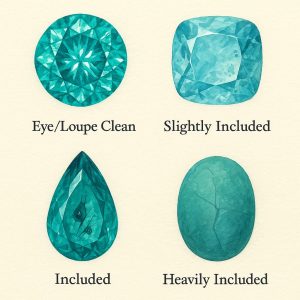
The visual aid above illustrates the main clarity categories you’ll encounter when assessing gemstones: Eye/Loupe Clean, Slightly Included, Included, and Heavily Included. Each type tells a story about how the gemstone formed and can influence not only its appearance but also its value.
What Are Inclusions?
Inclusions are internal characteristics—such as tiny crystals, fractures, or growth lines—that form naturally as the gemstone develops underground. Far from being “defects,” they are the geological fingerprints of a gem’s origin. Some inclusions are so distinctive they can even help gemologists pinpoint the country or mine of origin.
Eye/Loupe Clean
A gemstone that is eye clean appears flawless to the naked eye and typically under 10x magnification. These gems are rare, especially in stones like emeralds and Paraiba tourmalines, where inclusions are common. As a result, eye/loupe clean gems often command premium prices due to their scarcity and pristine optical performance.
Slightly Included
Slightly included stones show minor internal features visible under magnification but not to the unaided eye. These inclusions usually don’t interfere with the gem’s brilliance or durability. For many buyers, this level offers a sweet spot—preserving beauty while keeping costs more approachable.
Included
Included gems display noticeable internal features even without magnification. These may affect transparency or brilliance but can also give the stone character. Some collectors and designers intentionally choose included gems for their unique “fingerprints.” However, market value generally drops when inclusions become too visible or intrusive.
Heavily Included
Heavily included stones have significant internal features that can make the gem appear cloudy or structurally compromised. While they may not be suited for high-end fine jewelry, they still hold artistic or metaphysical appeal, particularly for cabochon cuts or collector’s items. These gems are typically more affordable, making them attractive to budget-conscious buyers or those who prioritize size over purity.
How Clarity Affects Value
In the colored gemstone world, clarity affects value—but it’s not everything. Some stones, like aquamarine or tourmaline, are expected to have good clarity, so inclusions reduce their value. Others, like emerald or rubellite, are almost always included, and eye-clean specimens are extremely rare (and expensive).
Ultimately, the interplay of clarity, color, cut, and carat weight determines a gemstone’s worth. While clarity enhances visual appeal and structural integrity, inclusions can sometimes add a layer of uniqueness that resonates beyond just price.
In short: not all clarity is created equal, and not all inclusions are flaws. For many gemstone lovers, beauty lies not in perfection, but in nature’s unmistakable touch.